Birth was never meant to be something we just endure.
Birth is powerful. Instinctive. Transformative.
For most of human history, birth was not separated from the rest of human life. It happened within families and communities, most often surrounded by women who understood birth because they had witnessed it, experienced it, or supported others through it.
There was risk, certainly. Before modern obstetric medicine, childbirth could be—and too often was—dangerous. We should never romanticize an era in which hemorrhage, infection, obstructed labor, hypertensive disorders, and other complications could become fatal because effective treatment simply did not exist.
But something else existed alongside that vulnerability:
Birth was understood as more than a medical event.
It was a human event.
A familial event.
A rite of passage.
And, across many cultures and traditions, a sacred one.
As birth moved from homes and communities into hospitals during the twentieth century, medicine gained extraordinary abilities to recognize complications and intervene when mothers or babies were in danger.
But in our pursuit of safety, we gradually allowed something essential to slip away.
We began caring extraordinarily well for the medical event of birth while too often underestimating the importance of caring for the woman experiencing it.
And I believe the next evolution in maternity care requires us to bring those two things back together.

How Birth Became a Medical Event
The transformation happened remarkably quickly in the United States.
In 1900, fewer than 5 percent of American births occurred in hospitals. By 1939, approximately half did. By 1954, roughly 95 percent of births were taking place in hospitals. That transition coincided with the professionalization of obstetrics and the development of hospital-based obstetric training.
And eventually, it brought enormous benefits. These advances have saved countless lives. That is not something we want to undo.
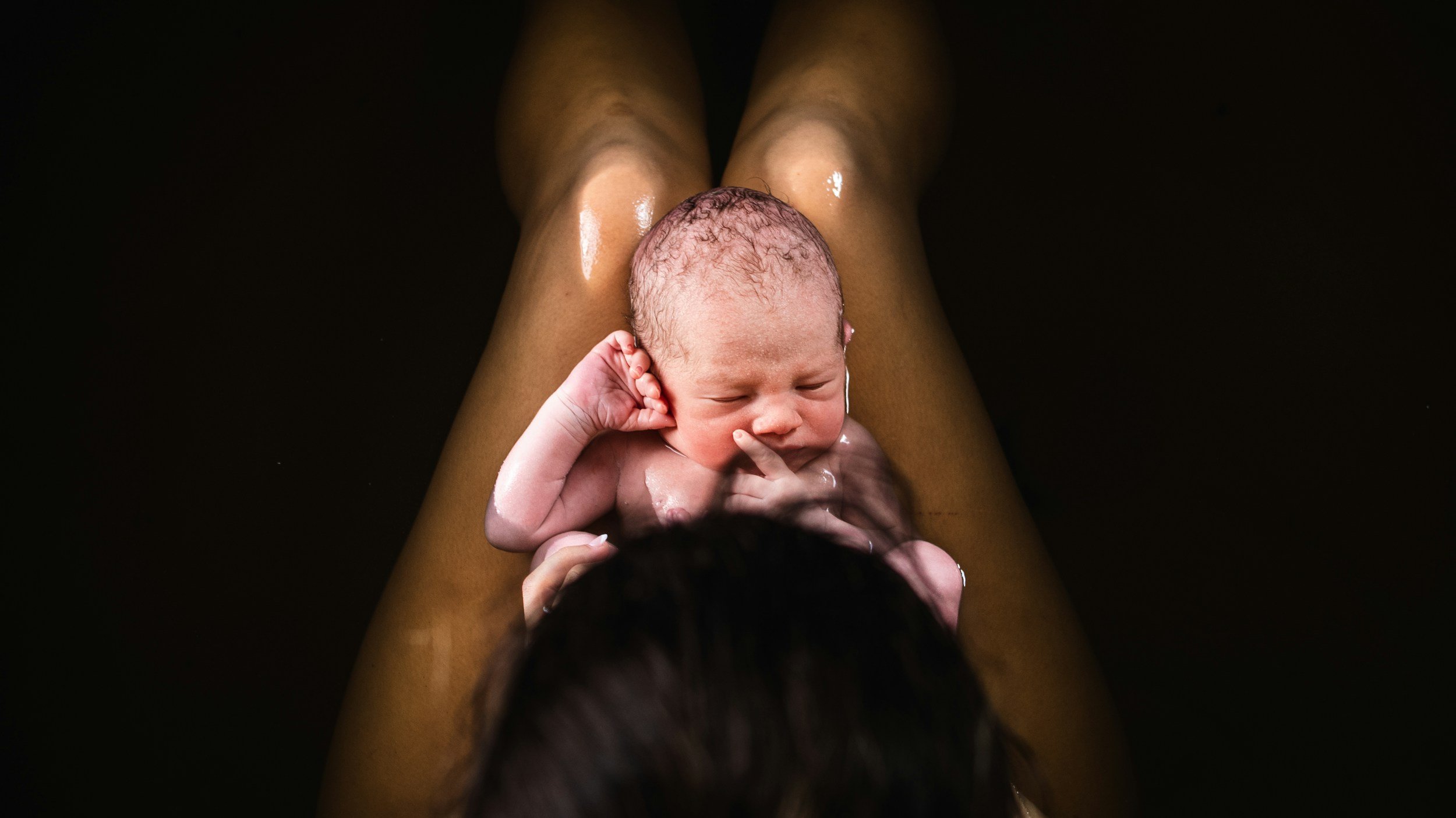
Birth Matters
Historically, women commonly gave birth with other women around them providing continuous physical, emotional, and practical support.
I have spent decades working with mothers and birth professionals, and I do not believe the answer to the problems in maternity care is to reject medicine. The answer is to recognize what medicine can do extraordinarily well—and what medicine alone was never designed to provide.
Because something important happened as birth became institutionalized. The people surrounding a laboring woman changed.
Historically, women commonly gave birth with other women around them providing continuous physical, emotional, and practical support. As birth moved into hospitals, the primary people in the room increasingly became professionals responsible for clinical tasks.
Their job was—and remains—essential. But clinical care and continuous human care are not interchangeable.
A nurse may be caring for several patients.
A physician or midwife may move between rooms and responsibilities.
A laboring mother’s medical team must watch vital signs, interpret fetal monitoring, administer medications, chart, communicate, diagnose, make decisions, perform procedures, and respond when something changes.
Those responsibilities are critical.
But who is continuously caring for her experience?
Who notices the moment fear enters the room? Who understands what makes her feel grounded? Who recognizes when she has stopped asking questions because she feels overwhelmed? Who helps her partner understand how to support her? Who reminds her that she still has a voice when plans change? Who protects connection when birth becomes complicated? Who stays?
That question brings us back to the role humans have filled for one another in birth for generations—and to what we now call the doula.
ACOG Is Saying Something Important About Doulas
In 2026, the American College of Obstetricians and Gynecologists released a Committee Statement titled “Partnering With Doulas in Clinical Settings.”
ACOG acknowledges the historical reality that women were traditionally supported during birth by other women who provided continuous emotional reassurance, physical comfort, and practical assistance. It also acknowledges what happened as birth entered modern health care: continuous nonmedical support could be lost while clinical teams necessarily became focused on medical responsibilities.
And ACOG is now explicitly calling for stronger partnerships between clinicians and doulas. Why? Because the evidence increasingly tells us that this kind of support isn’t merely a nice addition to birth. It can matter to outcomes.
Research cited by ACOG associates continuous support with shorter labor, fewer cesarean births, greater birth satisfaction, and higher rates of breastfeeding initiation. This represents an important evolution in how we think about maternity care.
The doula is not there to compete with the medical team. The doula helps complete the care team. The obstetrician or midwife is responsible for clinical care. The nurse provides essential clinical care and bedside support. The doula brings continuous nonclinical care: physical comfort, emotional support, education, advocacy for communication, familiarity, and presence. And the mother remains at the center of all of it.
That is the model I believe we should be moving toward.
The Research on Continuous Labor Support Is Compelling
One of the most frequently cited bodies of evidence comes from a Cochrane systematic review examining 27 trials, with usable data from more than 15,000 women.
Compared with usual care, women receiving continuous labor support were more likely to have a spontaneous vaginal birth and less likely to have a cesarean birth or instrumental vaginal birth. They also had somewhat shorter labors and were less likely to report negative feelings about their childbirth experience. Importantly, the researchers found no evidence of harm from continuous labor support.
ACOG has previously cited this evidence in its guidance on limiting intervention during labor, noting that one-to-one emotional support from someone such as a doula is associated with improved outcomes. Think about what that tells us.
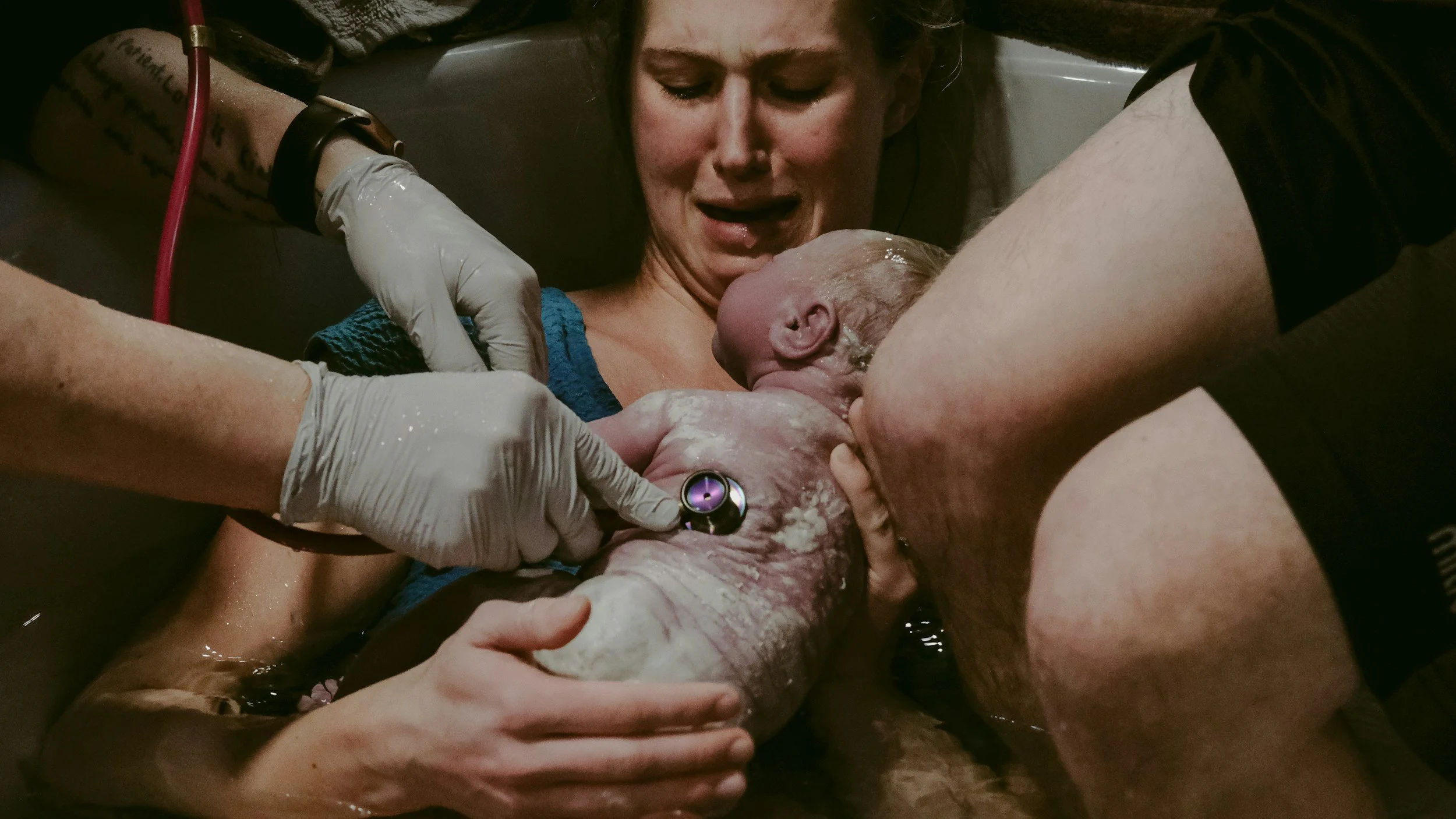
Safety Is More Than Surviving Birth
Human support isn’t separate from evidence-based birth care. Human support is part of evidence-based birth care.
This is where I believe maternity care must continue to evolve.
For decades, we have understandably measured birth outcomes through clinical endpoints. Is the mother alive and physically stable? Is the baby alive and physically stable? Were major complications avoided or successfully treated? These outcomes matter enormously.
But they cannot be our only definition of success.
The World Health Organization has made this distinction explicit in its recommendations for intrapartum care. WHO describes a positive childbirth experience as including not only the birth of a healthy baby, but birth within an environment that is clinically and psychologically safe, with practical and emotional support and kind, technically competent care. Those words matter:
Clinically safe and psychologically safe.
We cannot continue pretending they exist in entirely separate categories. A mother is not simply a uterus being monitored. She is a whole human being having an intense physiological, emotional, relational, and neurological experience. And her perception of what is happening matters.
A Mother Can Be Medically Safe and Still Feel Profoundly Unsafe
This is one of the most important distinctions I teach. A birth can be medically complicated and still be deeply empowering. A birth can involve an induction, epidural, assisted birth, or cesarean and still leave a mother feeling respected, connected, strong, and cared for. And conversely, a birth can appear clinically routine on paper while the mother experiences it as frightening, disempowering, or traumatic.
That is because trauma is not determined solely by what happened. The subjective experience matters, too.
Research into childbirth-related post-traumatic stress has repeatedly identified a negative subjective experience of childbirth as an important predictor of postpartum traumatic stress symptoms.
This changes the question we need to ask.
Instead of only: “Was she safe?” we also need to ask: “Did she feel safe?”
Not because feelings replace medical facts. They don’t.
But because psychological safety is itself part of maternal wellbeing. Feeling informed matters. Feeling heard matters. Knowing what is happening matters. Having choices explained matters. Consent matters. Connection matters. Continuity matters. Feeling that the people around you see you—rather than simply managing your labor—matters. And this is precisely where nonclinical birth support can become so powerful.
We Cannot Promise an “Easy” Birth. But We Can Help Birth Unfold With More Ease.
This distinction is at the heart of my work. Women are extraordinarily strong and capable when it comes to having babies—including when birth becomes complicated. But strength does not mean a woman should have to white-knuckle her way through pregnancy, birth, and postpartum. And empowerment does not mean convincing women that if they prepare correctly, birth will follow a perfect plan. After years as a doula trainer, childbirth educator, certified HypnoBirthing instructor, clinical hypnotherapist, and certified prenatal bonding (BA) specialist, I have come to believe there is an important difference between promising women an easy birth and helping them move through birth with ease.
Ease does not mean the absence of intensity.
It does not mean the absence of pain.
It does not mean avoiding intervention.
It certainly does not mean avoiding a cesarean when one becomes medically necessary.
Ease is something different.
Ease is the ability to remain connected to yourself even when birth asks something difficult of you.
It is having tools to work with your nervous system rather than feeling consumed by fear.
It is understanding what is happening in your body.
It is knowing your options.
It is being surrounded by people who communicate with you rather than around you.
It is feeling respected when circumstances change.
It is having someone remind you that you are still the person giving birth—not merely the patient to whom birth is happening.
And sometimes, ease is looking at a completely unexpected birth and still being able to say:
I was there. I was heard. I understood. I participated. I was cared for.
That matters.
The Sacred and the Safe Were Never Supposed to Be Opposites
Perhaps this is where we took a wrong turn. As medicine became capable of making birth safer, we began behaving as though safety required stripping birth of its humanity. It doesn’t. We don’t have to choose between science and instinct. We don’t have to choose between obstetricians and doulas. We don’t have to choose between fetal monitoring and emotional connection. We don’t have to choose between an operating room and dignity. We don’t have to choose between evidence and reverence.
And we certainly do not have to choose between a healthy baby and a mother who feels healthy, whole, respected, and powerful in the way she was cared for.
The future of birth is not about going backward.
It is about bringing forward what we should never have left behind.
Keep the medicine. Keep the emergency obstetric care. Keep the technology that saves lives. Keep the highly trained physicians, midwives, nurses, anesthesiologists, and neonatal specialists. And bring back the continuous presence.
Bring back the preparation. Bring back the trust. Bring back the attention to the mother’s emotional experience. Bring back the understanding that becoming a mother is not merely a physiological event.
Bring back the sacred.
This Is Why Doulas Belong on the Modern Maternity Care Team
A doula does not diagnose.
A doula does not perform clinical procedures.
A doula does not replace an obstetrician, midwife, or nurse.
And a skilled doula should never interfere with necessary medical care.
What a doula can do is occupy a role our increasingly complex medical system has difficulty providing consistently:
continuous care for the human being inside the medical experience.
This is why I believe ACOG’s call for clinician-doula partnership is so important. It moves the conversation beyond the outdated idea of medicine versus natural birth. That was never the conversation we needed. The conversation should be: How do we surround mothers with everything they need to be truly safe?
Clinical expertise. Evidence-based medicine. Continuous emotional support. Education. Informed decision-making. Respect. Physical comfort. Psychological safety. Connection. And when appropriate, lifesaving intervention. These things belong together.
Birth Is Not Something That Happens to a Woman
Birth is something a woman experiences with her entire being. Her body. Her nervous system. Her emotions. Her relationships. Her identity. And often, her understanding of herself. The moment a baby is born, something else is happening too: a mother is being born.
That transition deserves more than surveillance. It deserves more than a healthy-baby checkbox. It deserves skilled clinical care and deeply human care.
For more than a decade, this belief has shaped my work with expectant families, doulas, and perinatal professionals through Birth With Ease®. Because I don’t believe women need us to promise them perfect births. I don’t believe they need us to tell them birth will always be easy. And I certainly don’t believe empowerment means pretending complications don’t happen. I believe women need something far more meaningful.
They need knowledge without fear. Preparation without rigidity. Medical care without losing humanity. Support without judgment. Safety without surrendering autonomy. And the tools, relationships, and care that allow them to meet whatever birth brings from a place of greater confidence, connection, and ease.
Birth was never meant to be something we just endure.
We can make it safer without making it smaller. We can embrace medicine without abandoning meaning. We can care about outcomes while also caring deeply about experience. And we can build maternity care in which every mother is not only protected— but seen, heard, supported, and cared for. Because how a baby comes into the world matters. And how a mother is born matters, too.
References & Further Reading
American College of Obstetricians and Gynecologists (ACOG). “Partnering With Doulas in Clinical Settings.” Committee Statement, 2026. ACOG describes doulas as nonmedical professionals providing emotional, physical, educational support and advocacy and calls for stronger doula-clinician partnerships in maternity care.
American College of Obstetricians and Gynecologists (ACOG). “Approaches to Limit Intervention During Labor and Birth.” Committee Opinion. ACOG notes that continuous one-to-one emotional support, including support from a doula, is associated with improved outcomes during labor.
Bohren MA, Hofmeyr GJ, Sakala C, Fukuzawa RK, Cuthbert A. “Continuous support for women during childbirth.” Cochrane Database of Systematic Reviews. 2017;7:CD003766. Review of 27 trials examining continuous labor support and maternal and neonatal outcomes.
World Health Organization. WHO Recommendations: Intrapartum Care for a Positive Childbirth Experience. Geneva: World Health Organization; 2018. WHO recommends respectful maternity care, effective communication, and companionship during labor and defines a positive birth experience as including both clinical and psychological safety.
World Health Organization. “Making Childbirth a Positive Experience.” WHO emphasizes that clinical management alone is insufficient and that maternity care should address women’s psychological and emotional needs alongside clinical safety.
Dekel S, et al. Research and systematic reviews on childbirth-related post-traumatic stress demonstrate the importance of the subjective birth experience and the potential role of early psychological intervention following traumatic childbirth.
Thomasson MA, Treber J. “From Home to Hospital: The Evolution of Childbirth in the United States, 1928–1940.” Explorations in Economic History. 2008;45(1):76–99. Historical analysis of the transition from home to hospital birth and its relationship to maternal mortality.
Centers for Disease Control and Prevention. “Achievements in Public Health, 1900–1999: Healthier Mothers and Babies.” Morbidity and Mortality Weekly Report. Reviews major twentieth-century improvements in maternal and infant health, including antibiotics, safer blood transfusion, improved obstetric practices, and hospital care.